
- East Side Acupuncture6515 Basile Rowe
East Syracuse NY 13057
181 Kenwood Ave.
Oneida, NY 13421(315) 569-6579 East Syracuse Hours
Tue9am-6pmThurs9am-6pm
Oneida Hours
Wed9:30am-5:30pm
-
- Sign up to receive news and updates and get my free report:“The Top 10 Reasons to Try Acupuncture”

-
- TestimonialsWhy acupuncture? Why not?! Couldn’t hurt. My husband and I had been trying to get pregnant for 4 years. We were charting my BBT and watching for “signs” of fertility. We tried a ton of stuff. One day my mother had asked if I had ever considered acupuncture for fertility. She said that she had a co-worker whose daughter tried it for her fertility and after one session she ended up pregnant! I thought about it and figured that we... Read more »
When I decided that I wanted to stop drinking; I knew I needed help. I saw a commercial on tv for a addiction recovery place and in it someone was receiving acupuncture. I thought it was a place to start. I found casey on line and made a appt. He asked questions and took some history with out being judgemental then proceded with a treatment. For the first few weeks I was anxious but Casey gave me herb supplements and had me take note of
... Read more »I lead a very active lifestyle and for 4 years I had been experiencing pain in my arms as well as fatigue and shortness of breath whenever I worked out. I had been to several doctors who prescribed the general remedies; iron supplements, ibuprofen and rest. Finally I just gave up and conceded to the idea that the pain would never go away. After constant nudging from my training coach I agreed to go see Casey not really knowing what to expect but... Read more »I sought Casey’s help last year when I started nursing school and became physically ill from all the stress. I had a lot of trouble with my shoulder/back/neck, could not breathe well, and kept having weird pains all over I could not really explain. Casey was able not only to begin unlocking all the chaos in my body, but also to instruct me on the beginnings of better living that have all started coming together. The effects are not always
... Read more »After living a year in terrible pain even after a cortisone shot and physical therapy, I was regretfully facing shoulder surgery for an impingement. At this point, I decided to try one last thing…acupuncture. I found Casey through a referral and he was able to completely relieve my shoulder pain through acupuncture…something that I only thought that surgery and a long road of physical therapy would do. I would recommend Casey to anyone considering acupuncture…he explained exactly what he was
... Read more »I have been treated by Casey for an arthritic neck and lower back and have felt an over-all effective reaction to the acupuncture treatment. I recommend him to my friends and they also have had good results.
I was referred to Casey Lewis for sciatic pain in my leg, which being a hair dresser was becoming extremely difficult to bear. I was also experiencing hot flashes, day and NIGHT. After one treatment, my pain level immediately went from a 8 to a 1, and I have not had a hot flash since!! I have seen Casey only 6 times in 5 months, and my life now is practically pain free. I would recommend acupunture to anyone looking
... Read more »I saw Casey for 16 sessions recently. When I went to see him on a referral from a friend I was most concerned with back pain, but I was also working on some weight loss and thought this would help, as well as some stress relief. I was amazed that after the first visit I had absolutely no back pain and that would last about the full two weeks until I saw him again. He has also helped me with
... Read more »I have had 8 sessions with Casey, for a few issues I was having. Horrible leg cramps were keeping me up. After the first session (and it doesn’t hurt) I had a great nights sleep. My hands and fingers do not go numb, and my overall physical and mental feelings have become much better! I definitely recommend this New/Old treatment to anyone with problems, and definitely before you decide to have surgery. It just might avoid it! (like it did
... Read more » 

Latest Articles:
- • Outdoor Activities Best Enjoyed During Spring •
- • The Health Benefits of Spring Cleaning •
- • Delicious Recipes Using Spring Fruits and Vegetables •
Health Well News
Acupuncture 101: Understanding the 5th Season
In Traditional Chinese Medicine (TCM), late summer is a separate season.
But from a Western perspective, it doesn’t make sense. First of all, it’s a short season—from around the third week in August to the September equinox. And usually there’s nothing distinctive about late summer weather that makes it different from summer or fall.
Why have a fifth season?
Nature gives us the answer.
TCM is governed by the 5 elements, which represent the cycles of nature. Every plant and animal goes through the cycle of birth, growth, maturation, harvest and storage. Late summer corresponds to the “mature” part of the cycle. Plants are at their peak—fully mature with ripe fruits. It’s not quite harvest time, but it’s past the peak growing season.
One important quality of late summer is its transition from yang energy (active, hot and extraverted) to yin (reflective, cool and introverted). This pattern happens naturally. School resumes. People refocus on their routines. It’s a great time to reconnect with home and family. Even if you don’t identify late summer as a separate season, you probably make this transition anyway.
The earth element guides late summer. Its organs are the stomach, spleen, pancreas and muscles. Its color is yellow/orange and its taste is sweet.
Digestion is especially important in late summer. Pumpkin, squash, sweet potato, peaches, dates, apples, cherries, millet, almonds and coconut are all recommended late summer foods. While these foods have sweet flavors, remember that too much sweetness is not healthy. A big bowl of ice cream is still not a health food—even in late summer.
Earth guides our ability to think clearly. An imbalance in earth can lead to worry or obsession, but balance in earth gives a sense of calm, clarity and adaptability. Late summer is an excellent time to start or recommit to a meditative practice. By taking time quiet time, your daily activities will be more productive.
The emotions of earth are sympathy, compassion and nurturing. If you have considered volunteering, late summer is a good season to make that intention real.
Homemade Fruit Roll-Ups
Ingredients
• 2 ½ – 3 cups ripe or slightly over-ripe fruit, peeled and diced
• Sweetener to taste: honey, sugar, agave, etc.
• 2 teaspoons fresh lemon juice
Instructions:
Preheat oven to lowest temperature,
usually 140° – 200°F
Puree the fruit in a food processor until smooth. Taste and add the sweetener. Remember—the flavor will concentrate as the leather dries, so be sparing. Pour the mixture onto a baking sheet lined with plastic wrap or a silicone baking mat (don’t use foil, parchment, or waxed paper). Spread evenly so it is 1/8” thick. Bake for 6-8 hours until the center is not tacky. Remove from oven and peel off plastic wrap or baking sheet. Cut into strips. Store in airtight container
or freeze.
Tips:
• Suggested fruits: plums, peaches, nectarines, apples, strawberries, raspberries, grapes,
or mangos.
• The addition of sugar or honey enhances the texture and makes the fruit roll-ups chewier.
• If using plastic wrap, it will shrink a little as the fruit dries, so leave a little extra around the edges.
How to Pick a Health-Friendly Office Chair
If you work in an office, it’s likely you sit all day. You probably spend hours and hours in your chair—rarely giving thought to the chair that’s holding you up.
But if you were training for a marathon and spent hours running, wouldn’t you buy good
running shoes?
Choosing an office chair can make the difference between coming home exhausted and in pain, and coming home invigorated. Here’s what to look for in a good chair.
- Chair Shape: Choose a chair that follows the contour of your spine—especially if you are shorter or taller than average.
- Lumbar Support: Test the lumbar support to make sure it fits snug against your lumbar, giving support to prevent slouching or tension.
- Arm rests: Look for adjustable arm rests that adjust up and down as well as in and out for different body widths. Align the arm rests so that they support the weight of your arms when your arms extend down naturally from your shoulders.
- Adjustable seat height: Adjust the seat height so that your arms extend to your desk at 90° angles. Depending on your leg length, you may need a foot rest to support your legs so that your thighs are parallel to the ground.
- Seat length: Sit on the chair with your bottom against the back of the chair. The seat length should be 2-3 finger lengths between the end of the chair and the inside of your knee.
- Seat cushion: Make sure the seat is comfortable.
Once you have your seat adjusted for good body posture, you’re ready for the final step for healthy office posture.
Raise your computer screen so you can see it with your head in a neutral position. This usually means that your keyboard must be separate from the screen. If you use a laptop, put the laptop on a stand and use a separate keyboard on your desk when typing.
Pain Reducing Desk Stretches
A regular routine of stretching will relieve aches and pains and help prevent office injuries.
- Start with a simple head roll—head forward, to the side, back, to the other side and back forward again. The slower the better. Reverse.
- Shrug your shoulders and roll them forward and backward.
- Reach up and then back, touching your back with your right hand as far below your neck as you can. Use your left hand to gently push your right elbow farther behind your head. Repeat on the other side.
- Clasp your hands and turn them so your palms extend in front of you. Extend your arms forward and then above your head.
- Extend your right arm in front of you, with the fingers pointing up and palm forward. Use your left hand to gently pull the fingers toward your body. Repeat on the other side.
- Cross your right leg over your left one. Twist to the right, using your left arm for leverage against your right knee. Repeat on the other side.
- Sit on the edge of your chair, legs extended in front of you (make sure the chair is secure if it has wheels). Gently reach for your toes. If you have back issues, use your desk or a wall to support your body weight as you gently reach forward. Hold and breathe for 10 seconds.
- Walk around. Find reasons to make small trips away from your desk. Any movement is better than no movement.
Helping Teens Beat School Stress
With the start of the school season, many teenagers are again feeling the increased effects of stress. And while adults have many resources to help with stress, teenagers have few. Their stress is high, but their ability to cope is low.
Many schools are recognizing this and taking steps to help their students. Some schools have yoga programs or use therapy dogs. Some teach Transcendental Meditation or Mindfulness Training. More and more schools understand that teaching stress management is an important part of preparing teenagers for life.
If you have access to classes that help with stress, consider offering them to your teen. But even without classes, there’s a lot you can do to help your stressed teen.
Points Towards Health
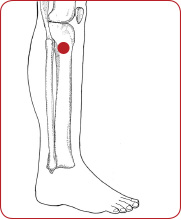
Three Mile Point (ST 36)
Location: Four finger widths below the kneecap, one finger width to the outside of the shinbone. If you are on the correct spot, a muscle should flex as you move your foot up and down.
Function: Strengthens the whole body, especially the immune system; tones the muscles and aids digestion as well as relieves fatigue.
Watch for signs of stress. Fatigue, headache, feeling sick, mood swings, changes in sleep or eating patterns, a drop in grades or difficulties in relationships can all be signs of stress. Address stress before it is a serious problem.
Be available. Even if you are busy, make time to spend with your teen—especially the times your teen is most likely to open up (bedtime, driving, etc.)
Soften your reactions. Teenagers are very sensitive. Express your opinions without judgment or argument.
Listen and translate. Sometimes teenagers can’t accurately describe how they are feeling. Sometimes “no one likes me” or “I’m stupid” means “I’m stressed and worried.” Help them identify feelings of stress so they know how to care for themselves.
Listen and illuminate. Sometimes teenagers lump feelings into a big pot and draw grandiose conclusions. “My teacher hates me” can mean that the teacher was just grouchy. Help your teenager separate real events from imaginary ones, real conflicts from misunderstandings.
Stop rushing. Remember that you may be hearing only part of the story. It may take time for a teen to relax enough to speak openly. Be available for long conversations.
Facilitate support from friends. Encourage your teenager to spend time with supportive friends and family.
Teach self-care. Encourage your teen to exercise and eat well. As challenging as it may be, talk about the benefits of a full night’s sleep. Point out that it feels good to feel good.
Teach time management. Teens are not likely to ask for help managing their busy schedules, but sometimes they need it. Encourage them to think of ways to complete their work without stress.
Ask your teen what they need. Do they need advice or just someone to listen? Do they need strategies or loving support or active intervention? Allow your teen to identify what would
be helpful.
Stop being helpful. Sometimes extra advice, strategies or tips just give the teen more things to worry about. Remind the teen that they are doing great.
Allow alone time. Sometimes being alone, watching YouTube or playing computer games is a way for teens to unwind. Understand that they need to relax, even if you don’t enjoy the activity.